
Rudronix Media
Google Ads Agency Los Angeles
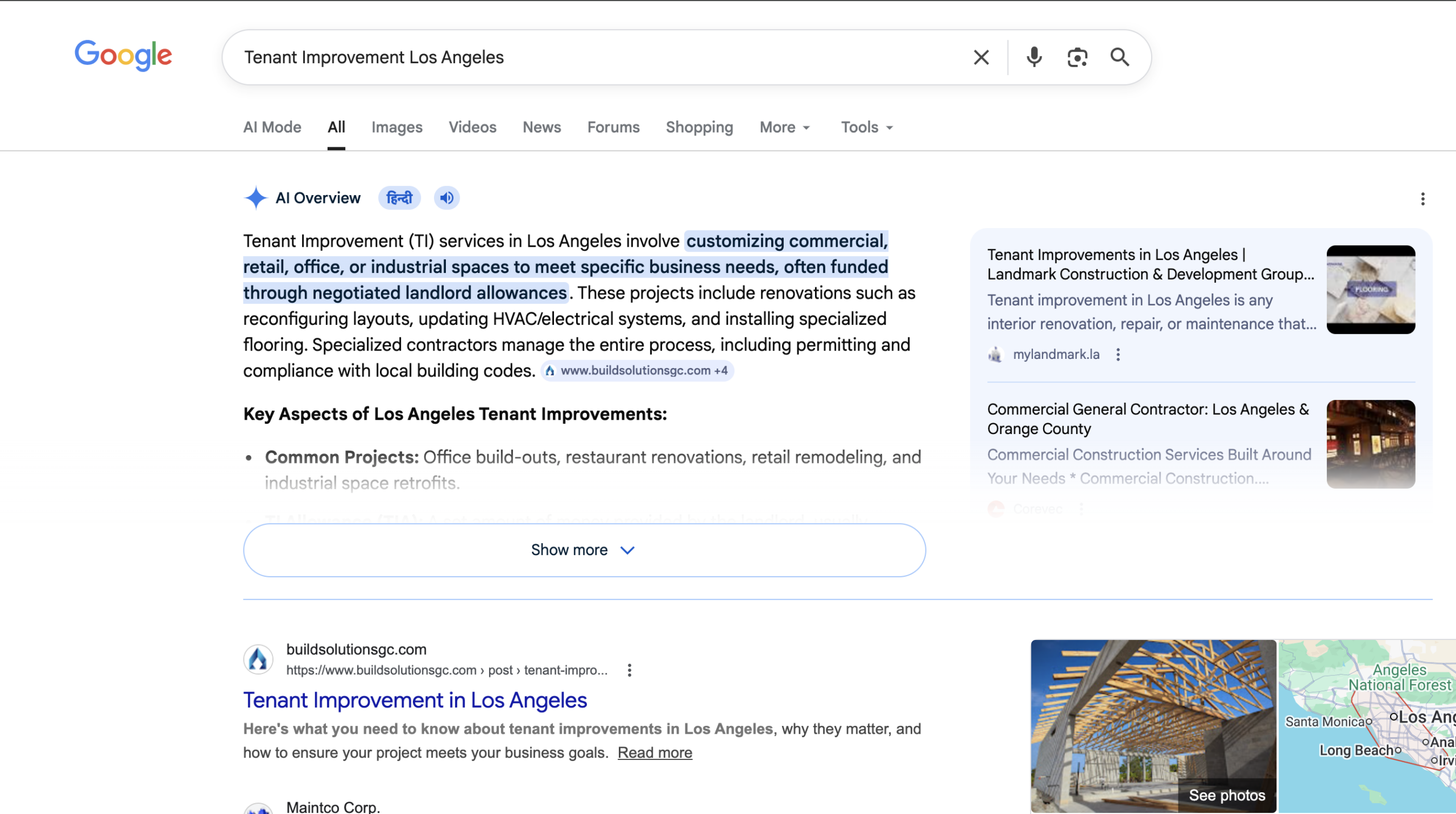
If you want to appear in Google AI Overviews in 2026, your content strategy needs to change and fast. Google’s AI-generated summaries are now answering user questions directly on the search results page, often before a single website gets clicked.
For small businesses, this is both a threat and a significant opportunity. If your content gets pulled into these AI answers, you gain visibility and authority without users even needing to search further. If it doesn’t, your organic traffic quietly disappears even when your rankings look fine.
Here’s exactly what you need to do.
What Are Google AI Overviews?
Google AI Overviews are AI-generated answer boxes that appear at the top of search results. They pull information from multiple websites and deliver a summarized, direct answer to a user’s query, covering everything from quick definitions and product comparisons to step-by-step solutions.
Traditional SEO alone won’t get you featured here. But Google still sources these answers from real websites. That means if your content is structured correctly, your business can be one of those cited sources.
Why This Matters for Small Businesses
Many small businesses across the US are already noticing the impact: lower click-through rates, fewer website visits, and declining organic leads — even with stable rankings.
The businesses winning in this environment aren’t necessarily the biggest. They’re the ones producing clear, structured, intent-matched content that AI can easily read and extract. That’s a playing field small businesses can compete on.
Is your content ready for AI search? Contact Rudronix Media for a free AI SEO content audit and find out where you stand.
5 Strategies to Appear in Google AI Overviews
1. Lead With Direct Answers
AI Overviews prioritize content that answers the question immediately, not after three paragraphs of introduction. Every section of your content should open with a concise, direct response before expanding into detail.
Instead of: “Google Ads are an important tool for businesses…” Write: “If your Google Ads are not generating leads, the cause is usually poor targeting or a weak landing page.” is exactly what AI extracts. See our full guide on Google Ads not generating leads for context.
This answer-first structure is what AI is built to detect and reward.
2. Build Structured FAQ Sections
FAQs are one of the most reliable ways to get featured in AI Overviews. They map directly to how users phrase questions in search, and they give AI clear, extractable Q&A pairs.
For a small business blog, relevant FAQ entries might include:
- What are Google AI Overviews?
- How do small businesses appear in AI search results?
- What is Generative Engine Optimization (GEO)?
Include at least three to five FAQs per article and place them toward the end of the post.
3. Implement Schema Markup
Structured data tells search engines exactly what your content means — and it significantly improves your chances of being cited in AI results.
The most important schema types for small business content are the FAQ schema, the Article schema, and the LocalBusiness schema. If you’re a service business in Los Angeles, California, or Pennsylvania, the LocalBusiness schema also reinforces your geographic relevance in local AI queries.
4. Build Trust Through Real Experience
Google’s AI Overviews prioritize content that demonstrates genuine expertise and real-world experience, known as E-E-A-T (Experience, Expertise, Authoritativeness, Trustworthiness).
Strengthen your content by adding case study results, client outcomes, specific before-and-after data, and first-person insights from work you’ve actually done. Generic content written without real-world grounding gets filtered out. Specific, experience-backed content gets cited. Our guide on best landing page practices to increase conversions is a good reference.
5. Target Specific, Narrow Topics
Broad topics like “digital marketing tips” are difficult for AI to extract clean answers from. Narrow, specific topics like “how to improve Google Ads conversion rate for a local service business” give AI exactly what it needs.
One focused topic per article, covered thoroughly, outperforms an article that tries to cover five things shallowly.
Common Mistakes That Keep You Out of AI Overviews
- Writing generic content with no direct answers
- Ignoring FAQ sections and schema markup
- Covering topics too broadly
- Relying only on traditional keyword SEO without considering AI readability
- Missing EEAT signals, like author credentials or real client examples
How AI Overviews Fit Into Your Overall SEO Strategy
AI search is not replacing SEO — it’s evolving it. The businesses that stay visible in 2026 will be the ones combining traditional on-page SEO with structured, intent-driven content built for both human readers and AI systems.
This approach is increasingly called Generative Engine Optimization (GEO), and it’s becoming as important as keyword rankings.
Appearing in Google AI Overviews in 2026 is achievable for small businesses — but it requires a smarter content approach. Focus on direct answers, structured formatting, real-world experience signals, and schema markup. These aren’t trends. They’re the new baseline for organic visibility.
Ready to optimize your content for AI search? Rudronix Media works with small businesses across the US to build content strategies that get featured. Book your free strategy session today.
FAQs: Google AI Overviews for Small Businesses
What content gets featured in Google AI Overviews?
Content that directly answers user questions, uses structured formatting, and includes schema markup has the highest chance of being cited.
Do I need technical SEO to appear in AI Overviews?
Yes. Schema markup and proper site structure are important signals that help AI identify and trust your content.
How long does it take to appear in AI Overviews?
There’s no fixed timeline, but consistently publishing structured, high-quality content typically produces results within 60 to 90 days.